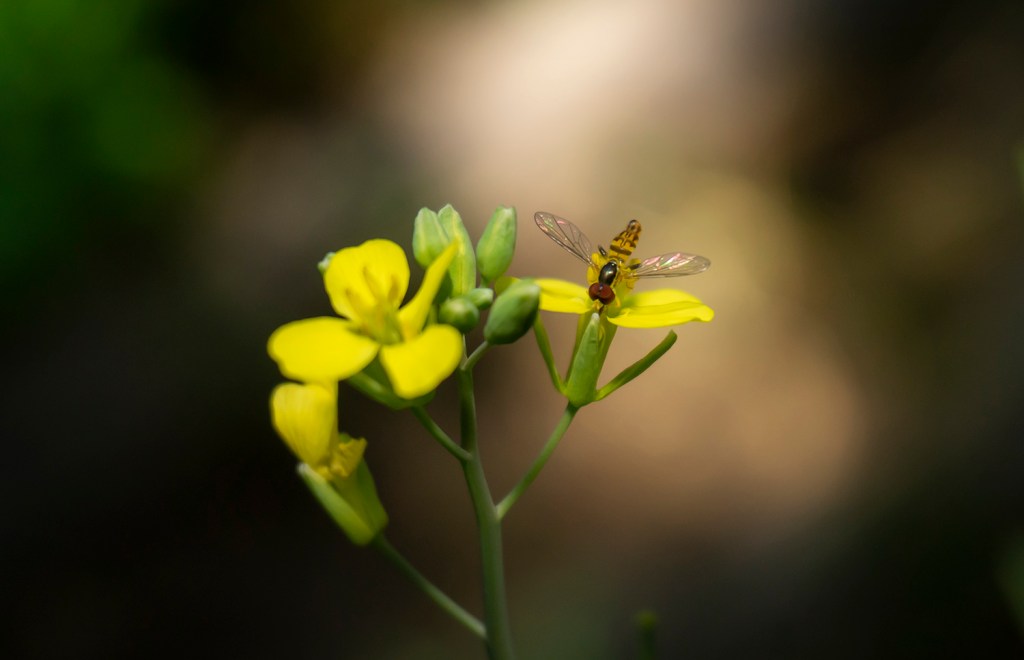
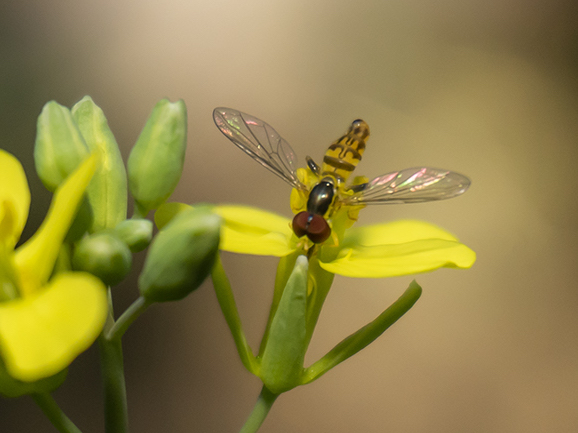
While in my garden in search of subjects to photograph for my macro exercises I spotted this flying insect enjoying the flowers of my kale plants. It was a very accommodating model as it lingered long on the flowers. I thought it was a type of bee. The insect guide tells me it’s a Syrphid, or more commonly known as a hover or flower fly.
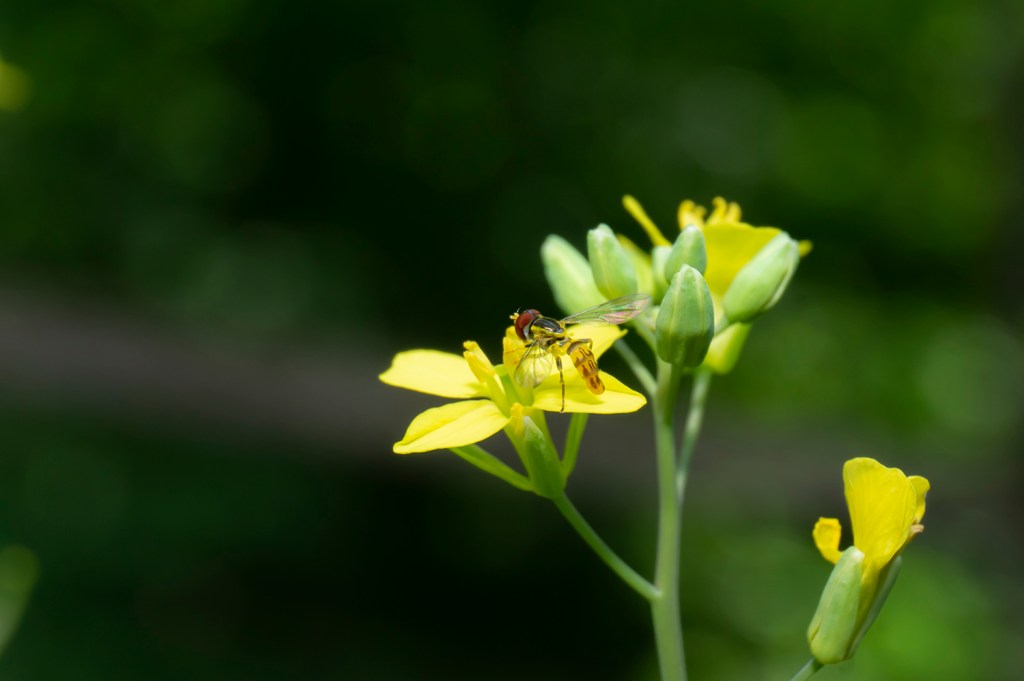
Over 6000 species of flies in the Syrphidae family have been identified with nearly 900 in North America. It’s not unusual for these insects to be mistaken for bees as most have yellow and black stripes, they mimic stinging Hymenoptera. The hover fly in my garden is commonly known as the eastern calligrapher because of the patterns on its abdomen. My model is a male as noted by the rounded tip of his abdomen.

Similar to the bees, syrphid flies are important pollinators, but also assist in controlling pests. Adult syrphids feed mainly on pollen and nectar while their larvae feed on aphids and other insects harmful to agriculture.
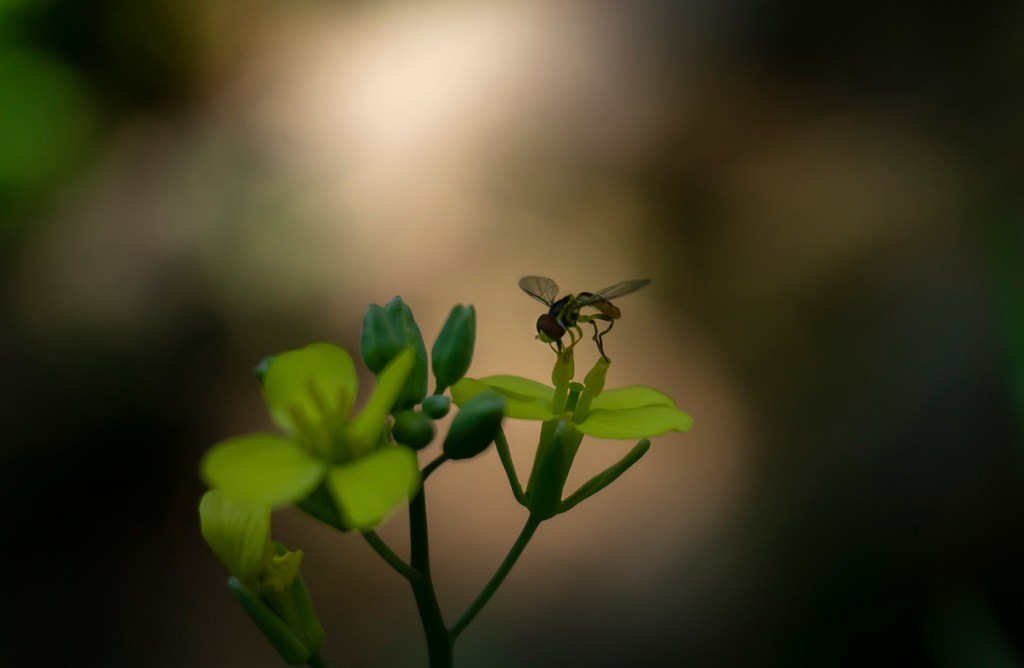
Sunken Meadow State Park on Long Island is among the New York state parks with the highest diversity of hover flies, and the aphid eating eastern calligrapher is one of the most commonly spotted.
I am delighted and honored that such an important little insect found my bolted kale plants valuable.


 Photographically.me
Leave a comment